Skip to main contentSkip to footer

NETWORK SPINAL

The Network Care Process

Network Spinal Care is a gentle, evidence-informed Chiropractic approach that works with the spine and the nervous system to release stored tension and stress. It was developed by Dr Donald Epstein and is practised by a small number of highly trained practitioners in Australia.

This page focuses on the process: what happens in sessions, how care progresses, and what to expect.

Book a network spinal consultation at the Lifewise chiropractic practice in Adelaide

How the nervous system drives the work

To understand why Network Spinal Care works the way it does, it helps to understand one thing: stress doesn’t only live in the mind. It lives in the body, and specifically in the nervous system. The changes it produces don’t automatically reverse when the stressor is removed.

When you experience sustained stress, whether physical, emotional, or simply the accumulated demands of modern life, the nervous system adapts. Muscles along the spine contract and stay contracted. Breathing becomes shallower. The autonomic nervous system maintains a state of partial alert even when no immediate threat is present. Over time, this defensive organisation becomes the baseline. The bracing becomes normal.

This is why pain that begins in one area migrates, why tension returns within days of a massage, why rest doesn’t fully restore energy. The pattern is system-wide, held in the nervous system, not localised to the area that hurts.

Network Spinal Care works by introducing precise neurological input at specific spinal gateways, signalling to the nervous system that it is safe to reorganise out of its defensive holding. The change comes from within the system rather than being imposed from outside.

What happens
in a session

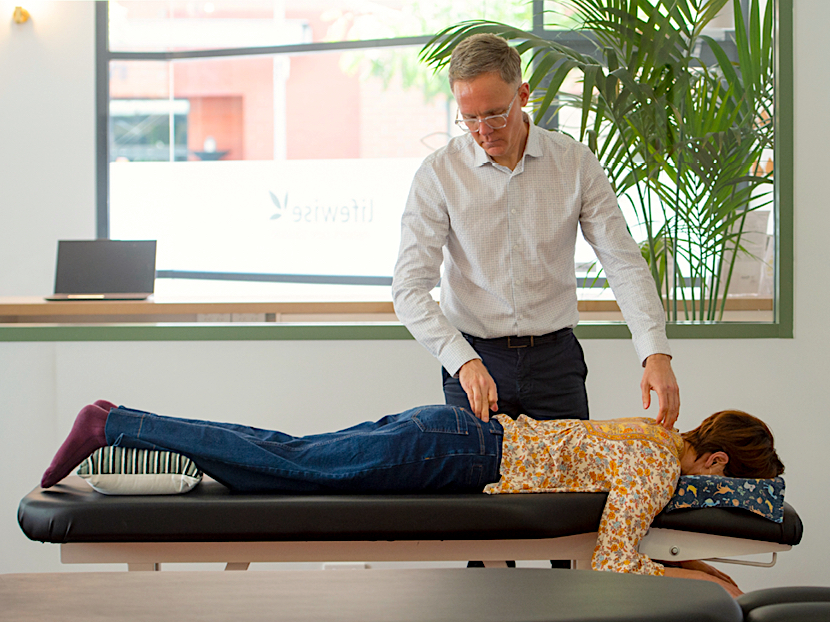
Sessions take place at Lifewise, 50/81 Carrington Street, Adelaide. You lie fully clothed on an adjusting table. No oils, no special preparation, nothing to remove.

We make specific, light contacts along the spine, primarily in the neck and the sacrum (tailbone), with additional contact points used as the assessment indicates. The contacts are extremely light, significantly lighter than conventional chiropractic manipulation. Between contacts, the nervous system is given time to integrate each input before the session continues. The session ends when the body signals it has received what it needs, not according to a fixed protocol or clock.

The experience is typically described as deeply relaxing. Many people notice their breath deepening during sessions, or a sense of warmth or gentle movement through the spine. As care progresses, two natural phenomena often emerge: the respiratory wave, a spontaneous wavelike movement through the spine coordinated with the breath, and the somatopsychic wave, a deeper and more dynamic whole-body movement representing more significant neurological reorganisation. Neither is produced by the practitioner. Both are expressions of the body’s own intelligence finding release pathways it couldn’t access before.

The effects continue working after the session ends. Many patients report that the most significant changes come in the hours and days following a visit.

Ongoing sessions run for approximately 15-20 minutes. The initial consultation, which includes a full assessment and explanation of findings, runs for approximately one hour.


Book a network spinal consultation at the Lifewise chiropractic practice in Adelaide

The three levels
of care

Network Spinal Care progresses through distinct levels. Understanding them helps make sense of why the work unfolds over time rather than producing immediate resolution.

You choose how far you want to go and then either stop or come less frequently to sustain the benefits.

1. Discover Care

The first level focuses on helping the nervous system transition from defensive organisation toward safety. This is foundational. Without it, deeper work is not possible because the system cannot release what it is still actively protecting.

The primary goal at this level is for the nervous system to develop its first release strategy, typically the respiratory wave. Most people notice improvements in posture and flexibility during this phase, and many notice reductions in pain and tension as the system begins unwinding. Sleep often improves. There is frequently a sense of being able to breathe more freely.

This is also where people often realise how much they were holding without knowing it.

2. Transform Care

Once the nervous system has established reliable release strategies, the work deepens. Transform Care addresses more fundamental tension patterns: the older, more deeply held defensive organisation that has been in place for longer.

This is often where the somatopsychic wave emerges, representing significant neurological reorganisation. People at this level often describe major shifts in how they relate to their body, to stress, and to their own history. Stored emotional content may also surface as the physical holding releases. This is a normal and healthy part of deep reorganisation, supported through appropriate pacing.

3. Awaken Care and Beyond

The focus shifts from recovery and release to growth, expansion, and integration. The nervous system has developed significant new capacities. The work becomes about consolidating those capacities and extending them into daily life: greater resilience under pressure, improved quality of connection and presence, and a fundamentally different relationship with stress. There is more capacity, more adaptability, and more choice in how to respond.

Session frequency

In the early stages of care, more frequent sessions produce better results, typically two to three per week, because the nervous system consolidates change more effectively when sessions build on each other closely. As the system establishes new patterns, frequency naturally decreases.

The care plan is always individualised based on your presentation, your response, and your goals. We will give you a clear recommendation after your first visit assessment.

Your first visit

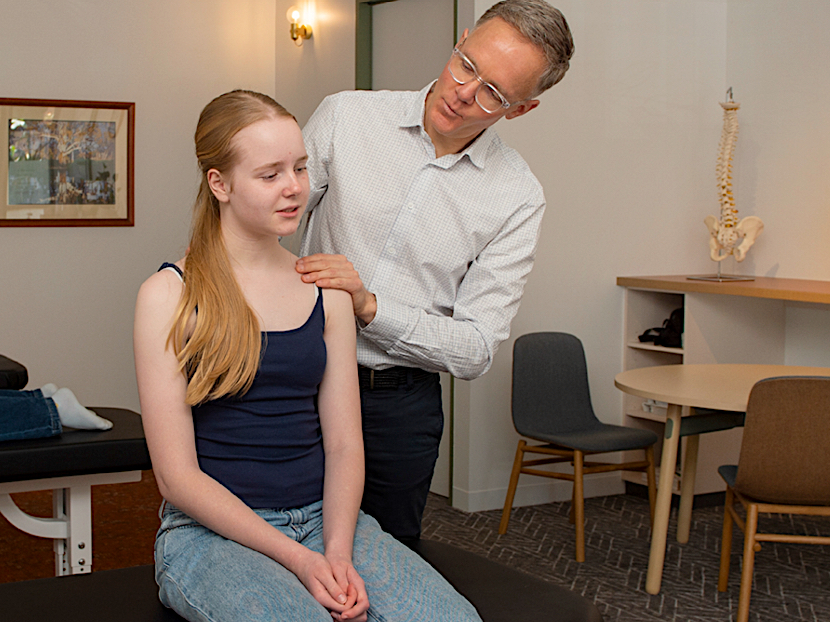
Your first appointment runs for approximately one hour. It includes a detailed conversation covering your health history, the symptoms or concerns that brought you in, what you have tried before, and your goals. It then includes a full spinal and nervous system assessment using observation and gentle palpation, nothing forceful. We explain what we find in plain language before anything begins. Your first session typically follows in the same appointment.

New patient appointments are available at lunchtimes throughout the week and Tuesday and Wednesday evenings. No referral needed. Health fund rebates apply for most major funds.

Book your first visit

Further reading