
Sciatica is pain, tingling or numbness that travels from the lower back through the hip, thigh and into the leg. It can range from a persistent background irritation to a shooting pain that makes sitting, standing and sleeping difficult. Understanding what’s behind it matters more than simply managing the symptom.
PHYSICAL
Sciatica
What’s happening
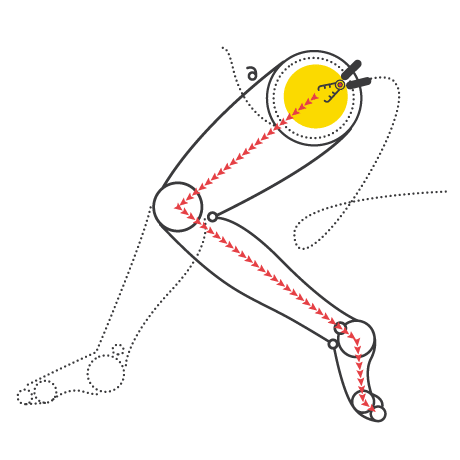
The sciatic nerve is the largest nerve in the body. It originates in the lower lumbar spine, passes through the pelvis, and travels down the back of the leg to the foot. It can become irritated or compressed, most commonly from a disc herniation, spinal narrowing, or sustained tightening in the piriformis muscle. The result is the characteristic radiating sensation that people describe as sciatica.
The lower back and pelvis are also areas where significant amounts of stress and protective tension accumulate over time. Prolonged sitting, postural habits, old injuries, and the muscular guarding that develops around a sensitised nervous system can all contribute to pressure on the sciatic nerve or its roots. This is why sciatica often worsens during stressful periods, and why it can be stubborn to resolve through approaches focused only on the painful area.
How we approach this
We take a thorough history before any hands-on work, including previous imaging, how the symptoms behave and what positions or activities aggravate or help. Our physical testing looks at which tissues are under stress, alongside a full assessment of your nervous system to get a global picture.
Network Spinal addresses the lumbar spine and pelvis gently, without the twisting or rotational movements that can aggravate an irritated nerve. We aim to take the pressure off the nerve, release muscle spasm and reduce the layers of tension. Improving movement and function in the area is important so your body is able to heal itself and future problems are minimised.
→ Back pain – the origin of sciatic symptoms
→ Poor Posture – when long hours of sitting feed it
What people notice
People with sciatica often notice that the radiating symptoms begin to reduce before the local back pain does. The leg sensation eases, sitting becomes more tolerable and sleep improves. With irritated nerves improvement tends to be gradual rather than immediate, and consistency of care matters in the early stages.
Irritated nerves need time to settle down, so sciatica often takes longer to resolve than people expect. There can be good days and flare-ups along the way, and that’s normal. Patience pays off.
If you are experiencing significant leg weakness, numbness around the groin or inner thighs, loss of bladder or bowel function, or severe and worsening symptoms, please seek urgent medical assessment.
Let’s understand what’s behind it
No referral needed. Your first visit is a conversation and assessment before anything else.
First visits are available at lunchtimes and some evenings.
Common questions about sciatica
For many people, yes. Sciatica comes from the sciatic nerve being irritated or compressed, often with layers of tension built up around the lower back and pelvis. Network Spinal works gently with your spine and nervous system to take the pressure off the nerve and ease that tension.
This is unlikely with this approach. There’s no cracking, twisting or rotational movement, which is what can aggravate an irritated nerve. The contacts are light and precise. We’ll check how your symptoms behave before any hands-on work, and adjust to what your body can take.
Sitting loads the lower back and pelvis, and it can press on the sciatic nerve and its roots. Long hours at a desk or in a car also keep the muscles around the pelvis tight. That’s why sitting is often the first thing to get harder, and one of the first things to ease as the pressure comes off.
It depends on the cause and how long it’s been there, but it often takes longer than people hope. Irritated nerves need time to settle down, commonly several weeks. Many people find the leg symptoms ease first, before the back pain does, and there can be flare-ups along the way. Regular visits matter most in the early stages. We’ll give you a straight view of what to expect after your first visit.
Yes. Stress adds to the protective tension your body holds around the lower back and pelvis, and that tension can add to the pressure on the nerve. Many people notice their sciatica flares during stressful periods. That’s why we work with your nervous system as well as your back.
No referral is needed. If you’ve had X-rays, an MRI or seen a specialist, bring the results. We don’t routinely take X-rays at the first visit, but we can request them if they’re needed.
Finding us
We’re at 50/81 Carrington Street in the Adelaide CBD, easily reached from across the city. Fees are published in full, and we issue receipts you can claim with your health fund.