
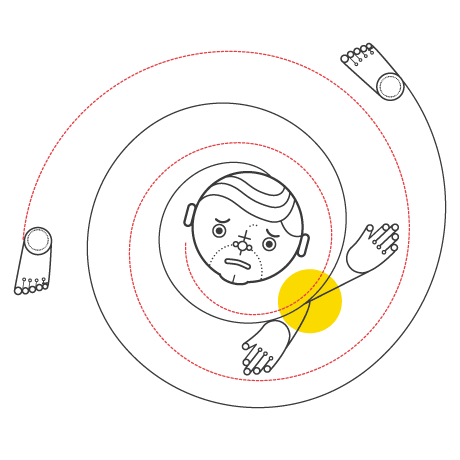
Excess tension is a sign that your body and nervous system are out of balance. It can feel like you’re compressed or stretched or wound up in a tight ball. Many people have a strong sense of how tension and stress go hand in hand.
STRESS & NERVOUS SYSTEM
Tension & Stress
How tension becomes structural
The body’s stress response is a powerful and sophisticated way of meeting challenges. When a demand arises, like a difficult conversation, a deadline or sprinting for a bus, the nervous system activates, muscles tighten, breath shallows and attention narrows. This is appropriate. The problem comes when the demand doesn’t fully resolve or there are lots of things coming at you all at once. Your body doesn’t have the opportunity to properly unwind.
Over years the left-over tension settles into your body as structural tension. Your shoulders stay elevated. Your jaw doesn’t release fully overnight. Your breath remains shallow, even at rest. The muscles of your back and neck stay switched on and “guarded” and don’t ease with a normal night’s sleep or a weekend away. Your body has learned to be braced. That learning is held not in the mind, but in the spine and nervous system.
How we approach this
Working with tension and stress through the spine and nervous system is different to working with it through the mind. Meditation, breathwork and cognitive approaches are valuable, but they work top-down, attempting to manage a system that largely operates beneath conscious control.
Network Spinal works directly with your spine and nervous system where the tension and holding patterns are held. Gentle contacts help your body to recognise where it is holding on and to let go. Over time many patients find that their baseline level of tension shifts because their body has let go of patterns it no longer needs to maintain.
→ Stress & Anxiety – when stress shows up as more than tension
What people notice
During a session many people feel themselves sinking into the table as well as taking deeper breaths. This is the nervous system beginning to relax its vigilance. Over time you notice less tension in your neck and shoulders, a feeling of physical ease and a sense of “coming home” into your body.
The body can learn to let go
Your first visit begins with a conversation about where the tension is, the key stresses you’ve experienced and what you’ve tried. No referral needed. First visits are available at lunchtimes throughout the week and some evenings.
Book your first visit
No referral needed. Your first visit begins with a conversation — your history, what’s been going on, what you’re hoping for.
First visits are available throughout the week.
Common questions about tension and stress
Yes, for many people. Stress shows up in the body as tension. Shoulders that stay elevated, a jaw that doesn’t release, a back and neck that stay guarded. Network Spinal works directly with your spine and nervous system, where that tension is held, and helps your body recognise where it’s holding on and let go. Plenty of people come in for tension and stress alone.
Mostly where you feel it. Your shoulders stay elevated. Your jaw doesn’t release fully overnight. Your breath stays shallow, even at rest. The muscles of your back and neck stay switched on and guarded. Over years your body learns to be braced, and that pattern is held in your spine and nervous system.
Because the tension has become the way your body holds itself. A massage, a good night’s sleep or a weekend away lifts the demand and can certainly help. Your body has learned to be braced, and it goes back to what it knows until your nervous system learns to let go.
Meditation and breathwork are valuable, and they sit well alongside this work. They work through the mind. Network Spinal works physically through your spine and nervous system, where the tension is held. Many people find each makes the other easier.
No. Many people come in because they feel wound up, compressed or unable to unwind, and nothing in particular hurts. That’s reason enough.
Yes. The contacts are light and precise, with no cracking, twisting or force at any point. We explain what we’re doing before we do it. Many people feel themselves sinking into the table and breathing more deeply as their body lets go.
The most common thing experienced during a first session is sinking into the table and relaxing, along with a surprising release of tension. Over a series of visits these changes become sustainable, with less tension in the neck and shoulders and a feeling of ease. Other things people notice are taking deeper breaths and a nice sense of calm. We’ll give you a straight view of what to expect after your first visit.
Finding us
We’re at 50/81 Carrington Street in the Adelaide CBD, easily reached from across the city. Many people come in on their lunch break from offices nearby. Fees are published in full, and we issue receipts you can claim with your health fund.